
Can You Find a Lowcountry Home That's Not in a Flood Zone?
It's one of the first questions we hear from buyers moving to the Lowcountry: “Can you just find me a house that's not in a flood zone?” It's a fair question, and the honest answer might surprise you.
Every Home in the Lowcountry Sits in a Flood Zone of Some Kind
Here in the Lowcountry, the answer isn't as simple as steering you toward one neighborhood and calling it flood-free. Whether you're looking in Charleston, Mount Pleasant, or elsewhere in the region, every property sits inside a FEMA flood zone of some kind. What changes from address to address is whether that property falls inside FEMA's Special Flood Hazard Area, or SFHA — the zone where flood risk is considered high enough that flood insurance is typically required for homes financed with a government-backed mortgage.
That distinction matters more than the phrase “flood zone” on its own. On FEMA's flood maps, you'll see zones labeled AE and VE inside the Special Flood Hazard Area, carrying the highest risk and the insurance requirement. You'll also see Zone X and Zone X Shaded, both outside the Special Flood Hazard Area and considered low to moderate risk. It's common for a single Lowcountry neighborhood, and sometimes a single street, to include a mix of all of these zones.
Zone X Isn't the Same as No Risk
This is the part we make sure every buyer understands before they fall in love with a house: being in Zone X generally means a lender won't require flood insurance, but it doesn't mean the home is immune to flooding. Flood insurance claims data across the Lowcountry consistently shows a meaningful share of claims coming from these lower-risk zones, and FEMA's own flood insurance program has reported a similar pattern nationally over the years, with claims regularly coming from outside the highest-risk areas altogether.
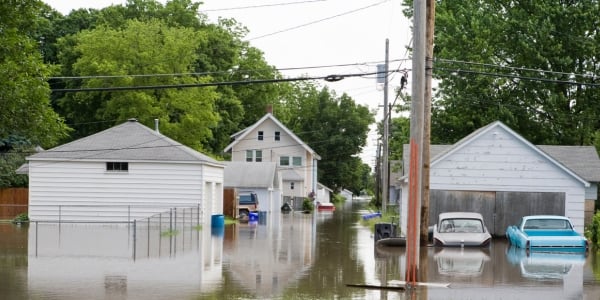
It makes sense once you think about how flooding actually happens around here. Lowcountry flooding isn't only driven by the big named rivers — the Ashley, the Cooper, the Wando. It also comes from smaller tidal creeks, drainage that backs up after a heavy afternoon thunderstorm, and the kind of nuisance street flooding many of us have driven through on a summer evening. A FEMA flood map tells you your regulatory risk category, but it can't capture every drainage ditch, king tide, or unusually wet season.
Why We Recommend Flood Insurance No Matter the Zone
Because of all this, we tell nearly every client the same thing: carrying flood insurance in the Lowcountry is almost always worth considering, even when a lender doesn't require it. A standard homeowners policy typically doesn't cover flood damage, so without a separate flood policy, a heavy rain event or storm surge could mean covering repairs entirely out of pocket.
The good news is that flood insurance on a Zone X home is often more affordable than on a high-risk waterfront property, and many of our local municipalities participate in FEMA's Community Rating System, which rewards communities for floodplain management efforts with premium discounts for homeowners. Mount Pleasant and the City of Charleston both currently qualify residents for a discount on eligible flood insurance premiums, and some neighboring communities carry different discount levels of their own. An insurance agent can tell you exactly what a policy would cost for a specific address and how any local discount applies.
What This Means for Your Home Search
So, can you find a house that's not in a flood zone? Not technically, not here in the Lowcountry. What you can find is a home outside the high-risk Special Flood Hazard Area, along with a clear understanding of what that means for insurance and resale, so you can move forward with confidence either way. That's where we come in.
Before you write an offer, we'll help you pull the FEMA flood zone determination for that specific address and share what the current owner pays for their flood insurance, so you have real numbers in front of you as part of your decision. Once you're under contract, we'll help you connect with a trusted local insurance agent who can quote your own policy alongside your homeowners insurance.
Flood zone status is just one piece of the puzzle, alongside elevation, foundation type, and a home's flood history, and it's worth understanding fully before you write an offer. We'd rather walk you through it up front than have it surprise you at closing.
If you'd like to dig deeper into flood insurance before you start touring homes, our guides on flood insurance for first-time Charleston buyers and why flood insurance matters for Lowcountry homeowners are great places to start. And whenever you're ready to talk through a specific neighborhood or address, our Buyer's Guide and Buyer FAQs can help you get oriented, or you can reach out anytime — we're always happy to help.
Warmly, Lauren, Tina and Gigi | Lauren Zurilla & Associates — Your Charleston Area Real Estate Experts
Lauren Zurilla & Associates, REALTORS® is an equal opportunity real estate team and fully supports the principles of the Fair Housing Act. We are committed to providing equal professional service without regard to the race, color, religion, sex, handicap, familial status, or national origin of any prospective client, customer, or resident.
Check out this article next