
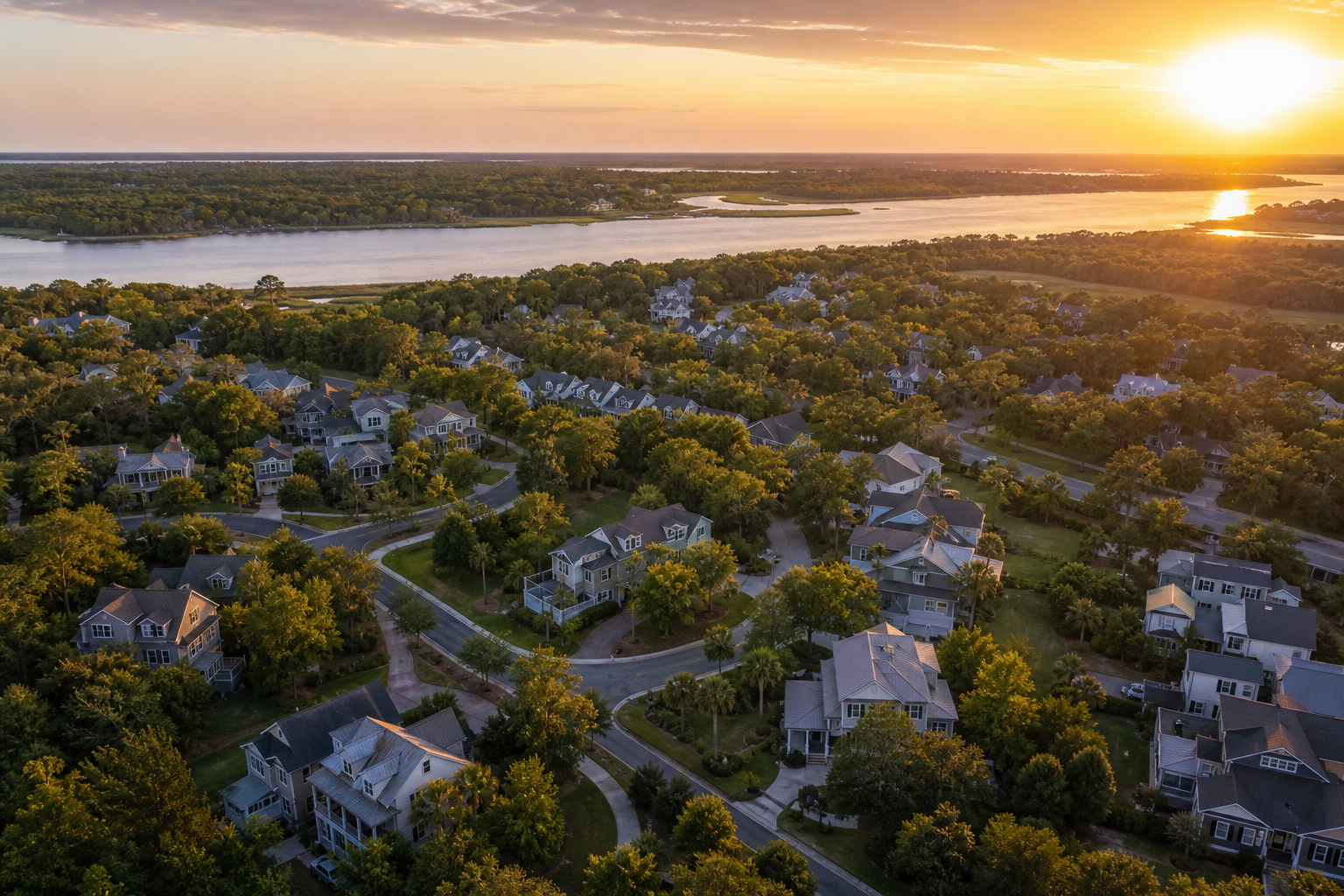
What It Really Takes to Sell in the Charleston Area's Cooling Market
The Charleston area market has shifted toward balance in 2026, with more inventory and longer days on market than in recent years. Sellers who price against recent comparables, prepare their homes carefully, and stay open to concessions can still close successfully — the strategy just requires more precision than it did just a few years ago.
Should You Sell If the Charleston Market Is Slowing Down?
Yes, but the playbook has changed. Charleston's housing market has moved toward a more balanced state in 2026, with rising inventory and buyers who have more options than they did at the 2021 peak. Sellers who price accurately from day one, present their homes well, and anticipate negotiation still close at strong prices. The sellers who struggle are the ones using 2021 logic in a 2026 market.
If you're staring down a listing decision and wondering whether the timing is wrong, this post is for you. We'll walk you through what's actually happening in the Charleston market, which submarkets and price bands are feeling the most pressure, and the specific moves that separate successful sellers from the ones who end up chasing buyers with price cuts.
What's Actually Happening in Charleston Right Now
Let's be direct: Charleston is not in a crash. But it is no longer the frenzied seller's market of 2021 and early 2022, when homes routinely drew multiple offers within 48 hours and buyers waived every contingency in sight.
The primary driver of the shift is mortgage rates. As of Q2 2026, Freddie Mac's Primary Mortgage Market Survey shows 30-year fixed rates generally in the 6–7% range, a dramatic change from the 3%–low-4% environment of 2020–2021. That rate difference translates to hundreds of dollars more per month on the same loan amount, and it has meaningfully reduced the pool of buyers who can comfortably afford mid-range and move-up properties.
The result is more inventory sitting longer. Buyers who do engage are more deliberate and more willing to walk away from a deal that doesn't pencil out. Seller concessions have become increasingly common: the National Association of REALTORS® has reported that the share of sellers offering concessions rose notably as inventory climbed and affordability tightened, particularly in mid-price and move-up segments where buyers are most rate-sensitive and often locked into cheaper existing mortgages.
Charleston's fundamentals — strong relocation demand, limited land, a desirable coastal lifestyle — still support values. But the margin for pricing error has shrunk considerably.
How the Submarkets Are Splitting
Not all of Charleston is cooling at the same pace. Here's how we're seeing it play out across the areas our team covers.
Beach and barrier island communities (Isle of Palms, Sullivan's Island, Folly Beach) typically sell well above the metro median, frequently in the high six-figure to multi-million-dollar range. Inventory here is structurally limited — you can't build more barrier island. Even so, these markets have slowed compared to 2021–2022, and listings can take longer to sell, especially heading into fall.
Mount Pleasant and the established suburbs remain a high-demand market with above-average prices and relatively limited supply, especially for detached homes in established neighborhoods. The cooling here is real, but more moderate than in outlying areas.
Summerville, Goose Creek, and the North Charleston growth corridors absorbed a significant wave of new construction during the boom years. As rates rose, spec-home inventory increased and days on market stretched, particularly in mid-price bands. If you're competing against new construction in these submarkets, your pricing and presentation have to be sharper.
Downtown's historic single-family homes and renovated condos on the Charleston peninsula continue to command a premium. But older housing stock introduces real negotiation risk. In more balanced markets, inspection contingencies are more likely to result in repair requests or price adjustments, because buyers no longer feel pressure to waive their leverage. Roof, HVAC, foundation, and moisture issues are the most common findings in peninsula homes, and sellers who go to market without a clear picture of their home's condition are more likely to face renegotiation mid-contract.
Johns Island, James Island, and Wando/Cainhoy tend to track closer to the metro-wide trend, with entry- and mid-price homes feeling the most rate sensitivity from today's buyers. Pricing accurately against recent comparables matters just as much here as anywhere else in the market.
The Seller Strategy That Actually Works in This Market
We've walked a lot of clients through this exact conversation over the past year. The ones who sold quickly and cleanly did three things right. The ones who struggled usually got one of them wrong.
1. Price it right the first time
This is the single most important decision you'll make. Pricing your home right from day one beats chasing the market down with reductions later — and we mean that as a hard rule, not a preference.
In today's more balanced Charleston market, homes that are priced thoughtfully from the start continue to attract buyers at a reasonable pace. Homes that are priced to last year's peak tend to sit, accumulate days on market, and eventually sell for less than they would have if priced correctly at launch. Buyers notice days on market. It signals something is wrong, even when nothing is.
The right price comes from the last 30–90 days of closed comparables in your specific micro-neighborhood — not from a Zestimate, not from what your neighbor got in 2022, and not from national headlines. This is exactly the kind of analysis we run for every seller before we set a list price. You can read more about the pricing traps sellers fall into in our post on why Charleston County home sellers still leave money on the table, and if you're already seeing warning signs, here's how to know if your home is priced too high.
2. Prepare the home like you mean it
In a balanced market, presentation is a direct line to your final sale price. That means addressing the obvious repair items before you list, keeping the interior clean and decluttered, and investing in professional photography (non-negotiable). For a full preparation checklist, our post on how to get your Charleston area home ready to sell walks through every step.
3. Go in ready to negotiate, and know what to offer
Buyers in 2026 Charleston expect more negotiation room than they did even a few years ago. That's not a bad thing if you're prepared for it. Sellers who get rattled are the ones who treat every concession request as an insult instead of a normal part of the process. Common forms of negotiation we're seeing right now include requests for closing cost contributions, rate buydown arrangements (where the seller contributes toward discount points to help the buyer lower their effective rate), and requests to extend closing dates to align with the buyer's lease end or financing timeline.
The Bottom Line
Selling in a cooling market is absolutely doable — it just requires more precision than the 2021 environment rewarded. Price accurately, prepare the home seriously, and walk into negotiations with a clear strategy. That's the formula.
If you're weighing a listing decision in Charleston and want to know exactly where your home stands in today's market, we'd be glad to run a current market analysis and walk you through a realistic strategy. Reach out here to schedule a seller consultation, or start with a free instant home valuation to see where your home lands. No pressure, just data and a plan.
Lauren, Tina and Gigi | Lauren Zurilla & Associates — Your Charleston Area Real Estate Experts
Equal Housing Opportunity. Lauren Zurilla & Associates is licensed through The Boulevard Company, regulated by the South Carolina Real Estate Commission (llr.sc.gov/re/). This article is general information only and does not constitute legal, tax, or financial advice. Confirm your specific costs, tax obligations, and contract terms with your closing attorney, tax advisor, and lender.
Check out this article next