
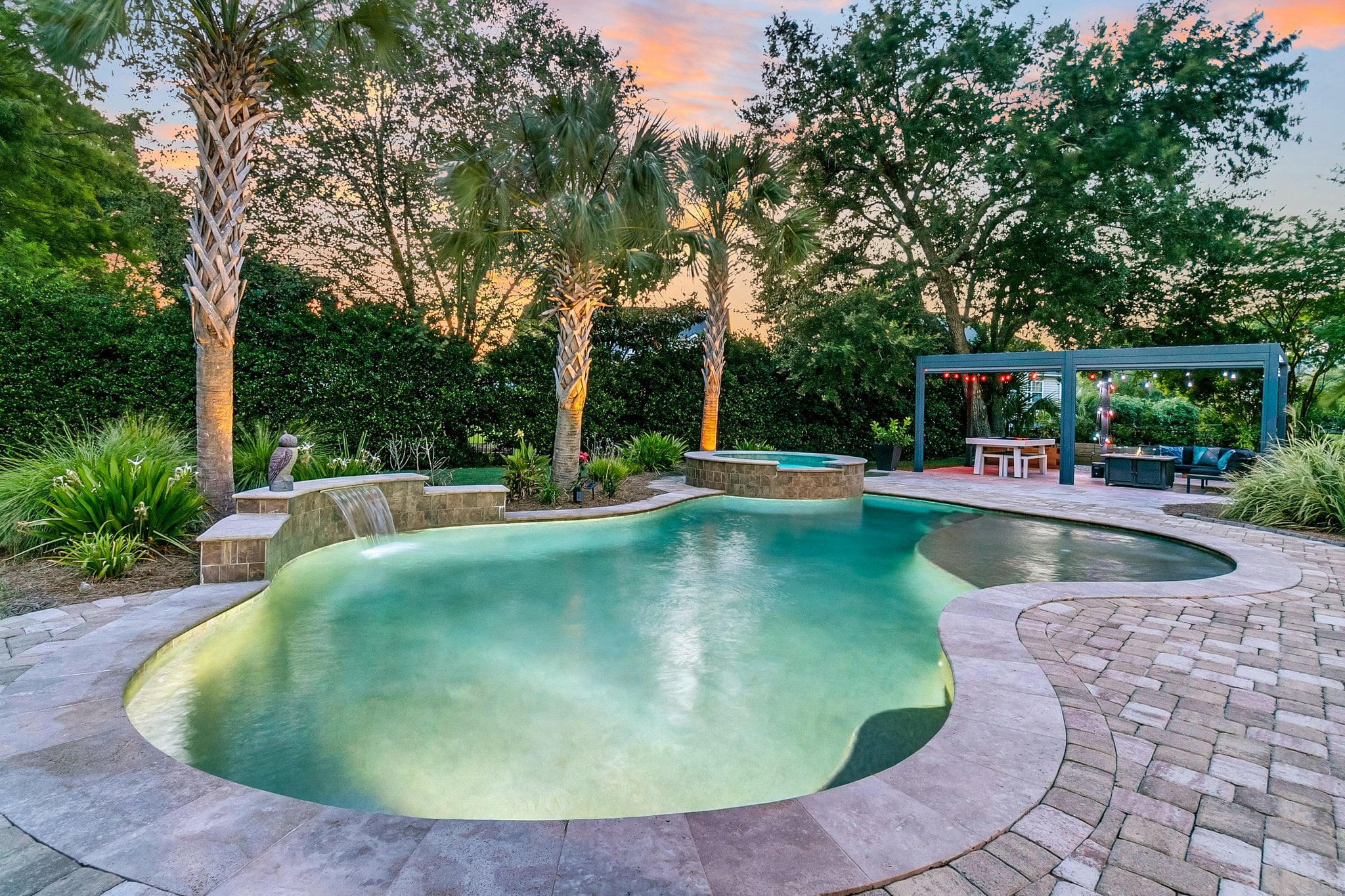
Thinking About Adding a Pool in Mount Pleasant? Here’s What to Research First
There’s something about a backyard pool in the Lowcountry that just makes sense. Long summers, warm evenings, and a lifestyle that practically begs for time spent outside. If you’re searching for a home in Mount Pleasant and imagining yourself poolside, you’re not alone — it’s one of the most common requests we hear from buyers.
But before you fall in love with a property because of its pool-worthy backyard, there’s some important groundwork to do — literally. Mount Pleasant has specific permit requirements, impervious surface limits, and, for properties near tidal creeks or marsh, a coastal regulatory line that can significantly affect where and whether a pool can be built. We’ve helped a lot of buyers navigate this, and we want to make sure you have the full picture before you make an offer.
Start With a Property Survey
When we’re working with buyers who have a pool on their wish list, requesting a copy of the existing survey is one of our first steps. A survey shows us where the property lines fall, where any easements or drainage corridors run through the yard, and — for properties near water — where the OCRM critical line is located. All of that matters when it comes to figuring out whether a pool is actually feasible before you make an offer.
The Town of Mount Pleasant may also require a formal survey as part of the pool permit process. The Town’s Building Inspections Division can help answer questions about what’s required for a specific project. You can reach them at [email protected] or visit tompsc.com/151/Permit.
If the Property is Near Marsh or a Tidal Creek, the Critical Line Matters
This is something that surprises a lot of buyers, so we want to be clear about it: the OCRM critical line doesn’t just apply to oceanfront properties. Any home adjacent to tidal creeks, marshes, or coastal wetlands — which describes a significant number of homes in Mount Pleasant — may be subject to this regulation.
The critical line is a boundary established by South Carolina’s Bureau of Coastal Management (formerly OCRM, now part of the SC Department of Environmental Services) that defines where coastal protection requirements apply. Under Mount Pleasant’s zoning code, a 30-foot setback for all impervious surfaces — including pools — is measured from this certified critical line, regardless of whether the line falls inside or outside the actual property boundaries. That means a pool could be limited or even precluded on a marsh-view lot where you might not expect it.
For properties near water, a certified critical line survey by a licensed South Carolina land surveyor is typically required before construction can move forward.
Know Your Impervious Surface Limits
Mount Pleasant limits the amount of impervious surface — any non-porous material that prevents rainwater from absorbing into the ground — to 40% of total lot coverage in most residential areas. That includes the home’s footprint, driveway, sidewalks, patios, and yes, the pool area itself.
On a smaller lot, a pool plus a generous deck can get close to or exceed that threshold quickly, especially if the home already has a large footprint or extended hardscape. This is another reason a survey and a candid conversation with a pool builder early in the process can save you from an expensive surprise later. You can use the Town’s interactive GIS map to look up zoning and lot coverage details for any property you’re exploring. Search “GIS Map” at tompsc.com.
The Permit Process: What to Expect
Any in-ground or substantial above-ground pool in Mount Pleasant requires a building permit. Applications are submitted through the Town’s online portal, and plan review lead time can run a month or longer. Pool permit applications also trigger a required Stormwater Management and Tree Preservation Permit, so budget for that step in your project timeline.
Standard setback rules apply: pools must generally maintain a 6-foot setback from rear and side property lines, though homes in Planned Development districts may have a 10-foot requirement. And if you’re in a Special Flood Hazard Area — which you can confirm via the Town’s GIS map or FEMA’s Flood Map Service Center at msc.fema.gov — there may be additional construction requirements to meet FEMA flood zone standards.
Don’t Forget the HOA
Most established neighborhoods in Mount Pleasant — from Rivertowne Country Club to Hamlin Plantation and beyond — have Homeowners Associations with Architectural Review Committees. Town permit approval and HOA approval are entirely separate processes, and the HOA may have guidelines on pool placement, fencing, equipment screening, and more that go beyond what the Town requires.
We always recommend reviewing the CC&Rs and requesting ARC guidelines before making an offer if adding a pool is part of the plan. Submitting a conceptual layout to the HOA before investing in detailed construction drawings can save significant time and money.
We’ll Help You Think It Through
A pool is absolutely achievable in Mount Pleasant — and for the right property, it’s a wonderful addition. The key is knowing what you’re working with before you fall in love. That means understanding the lot size, the critical line if applicable, the impervious surface budget, and the HOA landscape. The more of this you understand upfront, the more confidently you can move forward.
If you’re searching for a home in Mount Pleasant and want to know whether a specific property has real pool potential, reach out to us. We know this market well and love helping buyers think through exactly these kinds of questions. You can also get a head start on your home search here.
Warmly,
Lauren, Tina and Gigi | Lauren Zurilla & Associates — Your Charleston Area Real Estate Experts
Check out this article next