
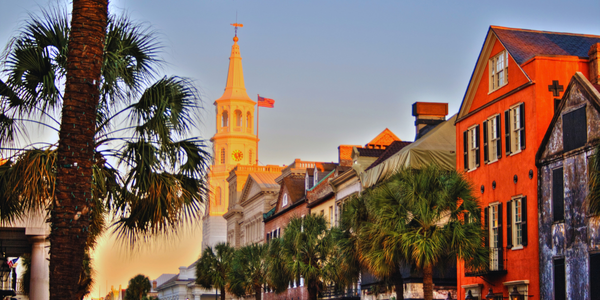
Moving to the Lowcountry? What We Tell Every Buyer Relocating to Charleston
Choosing where to live in the Lowcountry starts with how you want to live here. Here is how we help relocating buyers weigh proximity to restaurants and services, the beaches, downtown Charleston, and work, along with what September 2026 prices look like across the area and when to talk with a lender.
What do buyers need to know when relocating to Charleston, SC?
When relocating to Charleston, the first thing to decide is what you want your life to look like here, because the Charleston area is made up of distinct communities that each offer a different day-to-day experience. Once you know which areas fit, compare prices, commute routes, and flood exposure within that shortlist. Meet with a lender before you tour so you understand your budget, and drive your likely commute at rush hour, because outside of CARTA's limited bus service, your drive is your commute.
Key Takeaways
- Start with lifestyle. Many relocating buyers are weighing some combination of proximity to restaurants and services, the beaches, downtown Charleston, and work, and how you rank those narrows the map quickly.
- Prices vary widely by area. In September 2026, median sale prices ranged from $625,000 on James Island to $3.4 million on Daniel Island, with Charleston County at $715,000 (Charleston Trident MLS, September 2026).
- Aside from CARTA, which has limited service areas and hours, there is no public transit system here. Your drive is your commute.
- Meet with a lender before you tour to understand your budget. You will need a pre-approval in hand before you make an offer.
What do you want your life to look like in the Lowcountry?
It is the first question we ask every relocating buyer, and the answer almost always comes back to some combination of four things: being close to restaurants and everyday services, being near the beach, being near downtown Charleston, and being within a reasonable drive of work. Few homes put all four right outside the door, so the useful exercise is deciding which ones matter most to you.
Wanting to walk to dinner and spend weekends downtown points to a very different map than wanting to be minutes from the sand, and both look different from prioritizing a short drive to an office in North Charleston. Price matters, of course, but it works best as a filter applied once you know which parts of the Lowcountry match the life you want. Starting with price alone makes it easy to land in an area that fits the budget but misses what made you want to move here.
Which areas should relocating buyers consider?
Our team covers the full Lowcountry, including Mount Pleasant, Daniel Island, James Island, Johns Island, West Ashley, Isle of Palms, Sullivan's Island, Cainhoy, Wando, Awendaw, McClellanville, and Huger. Each sits differently in relation to those four priorities, and here is how a few of the areas we are asked about most often fit together.
Mount Pleasant sits across the Cooper River from downtown Charleston, connected by the Arthur Ravenel Jr. Bridge, with the beaches of Sullivan's Island and Isle of Palms just beyond it and shopping, dining, and services along Highway 17 and Coleman Boulevard. Daniel Island is part of the City of Charleston but sits in Berkeley County, between the Wando and Cooper rivers, with its own town center and I-526 access toward Mount Pleasant and North Charleston. James Island connects to downtown by the James Island Connector and is also the route to Folly Beach. West Ashley lies across the Ashley River from the peninsula, and Johns Island sits south of James Island and West Ashley, on the way to Kiawah and Seabrook islands. Isle of Palms and Sullivan's Island are the beach communities themselves.
Each area also has its own mix of housing types, price points, and flood and storm exposure. Working through how you rank your priorities is the conversation we have before we ever look at listings, and our overview of buying a home in Charleston covers the broader process in detail. You can also take a closer look at each area with our area guides.
How do home prices compare across the Charleston area?
Prices vary widely depending on which part of the Charleston area you are shopping in, and a number you saw in a national headline may describe a very different slice of the market than the neighborhood you are considering. Here is how September 2026 closed sales looked across the area, according to Charleston Trident MLS, September 2026:
Area | Median Sale Price | Median Days on Market |
Charleston County (countywide) | $715,000 | 28 |
Mount Pleasant | $1,100,000 | 32 |
James Island | $625,000 | 26 |
Daniel Island | $3,400,000 | 10 |
Source: Charleston Trident MLS, September 2026, closed sales.
These are one-month medians, and some areas had very few sales. Daniel Island had 8 closed sales in September and James Island had 3, so a single sale can move those medians a long way from one month to the next, and it is worth looking at several months together before setting expectations. An individual home's value also depends on its condition, street, age, and timing.
When you compare numbers, make sure they describe the same geography. Daniel Island is a good example: it is part of the City of Charleston but sits in Berkeley County, so it is not included in the Charleston County figure above.
How should you plan your commute when relocating to Charleston?
Aside from CARTA, which has limited service areas and hours, there is no public transit system in the Charleston area. Your drive is your commute, which makes the route between a home and the places you go every day one of the most practical parts of choosing where to live.
From Mount Pleasant, a commute downtown typically means the Arthur Ravenel Jr. Bridge, while trips toward North Charleston and the airport usually run along I-526 across the Wando and Cooper rivers. From James Island, the James Island Connector is the main route downtown. Roadwork is part of the picture too: SCDOT's Lowcountry Corridor project is widening about seven miles of I-526 from four to six lanes between Rivers Avenue and Paul Cantrell Boulevard. If your commute would use that stretch, it is worth checking the project's schedule.
How to test a commute before you buy
Start with the exact property address and your workplace, not just the neighborhood name, to get the most accurate picture. Run the route during weekday peak periods, around 7:30 to 8:30 a.m. and again from 5:00 to 6:00 p.m. on a Tuesday or Wednesday, since that is when bridge and interstate congestion shows up. If you are coming to Charleston for a home search trip, build in time to drive your likely commute at rush hour yourself.
We drive these roads every day, and commute patterns are one of the most useful things to talk through with us before you shortlist neighborhoods.
When should you talk to a lender when relocating to Charleston?
Meet with a lender before you start touring homes. You do not need a pre-approval in hand to tour, but that early conversation helps you understand your budget before you fall in love with a home outside your comfort zone, and it gets the pre-approval process started. You will need a pre-approval, not just a pre-qualification, before you make an offer. With Charleston County homes selling in a median of 28 days in September 2026 (Charleston Trident MLS, September 2026), it helps to have that in place by the time you find the right home.
When you are managing a move from another state, a lender's responsiveness matters as much as the rate. These are the practical questions to ask before you commit:
- Are you able to lend in South Carolina?
- Who handles my file after pre-approval, and will I have a direct contact?
- How quickly can you produce an updated approval letter when I am ready to write an offer?
- How do you handle questions that come up on evenings or weekends?
It also helps to know that in South Carolina, a real estate attorney conducts the closing. If you will not be in town for closing day, talk with your closing attorney early about how signing will work. For a step-by-step look at the process, this guide to buying in Mount Pleasant and the Charleston area walks through each stage.
What should relocating buyers know about flood zones and insurance?
Flood exposure is the factor that most often surprises out-of-state buyers; most Lowcountry homes are in a flood zone. Before you make an offer, we share the current owner's flood insurance cost with you so it can be part of your decision. Once you are under contract, you will get flood quotes alongside your homeowners insurance quotes.
Lender requirements for flood insurance vary, and some lenders require it even outside designated flood zones, so ask your lender directly. An elevation certificate is not required, but it may help lower your premium if one is available for the home.
To research a specific address, the FEMA Flood Map Service Center shows flood zone designations, and the South Carolina Emergency Management Division's Know Your Zone map shows hurricane evacuation zones.
Frequently Asked Questions
How do I decide where to live when relocating to Charleston?
Start with how you want to live, not with price. Most relocating buyers are balancing proximity to restaurants and everyday services, the beaches, downtown Charleston, and work. Rank those priorities, identify the areas that match, and then compare prices, commute routes, and flood exposure within that shortlist. We walk through this with every relocating buyer before we start looking at homes.
Is Charleston a buyer's market or a seller's market in 2026?
It depends on the area, and price and days on market alone will not settle the question. In September 2026, median days on market ranged from 10 on Daniel Island to 32 in Mount Pleasant, with Charleston County at 28 (Charleston Trident MLS, September 2026). Daniel Island's figure came from just 8 closed sales, though, so it describes a small group of homes. Whether an area favors buyers or sellers depends on how much inventory is available relative to sales, and we can pull that for any area you are considering.
How much time should I allow to buy a home when relocating to Charleston?
Once you are under contract, plan on roughly 30 to 45 days to closing, though timing varies with your financing and contract terms.
Do I need a Charleston lender to buy a home here?
No. You don't need a lender based in Charleston, but you do need one who can lend in South Carolina. Whether you work with a local lender or one you already know back home, meet with them before you tour so you understand your budget, and have a verified pre-approval in hand before you make an offer. It also helps to ask who will handle your file after pre-approval and how quickly they can turn around an updated approval letter when you're ready to write an offer.
Which Charleston-area neighborhoods have the easiest commutes?
It depends entirely on where you are going. Aside from CARTA, which has limited service areas and hours, there is no public transit system here, so most commutes come down to which bridges and interstates connect your home to your workplace. The most reliable approach is to test the route from a specific address during weekday peak hours. We help relocating buyers work through this area by area based on their actual destination.
The Bottom Line on Relocating to Charleston
The best place to live in the Lowcountry is the one that fits how you want to spend your days, whether that means being close to the beach, downtown, great restaurants, your office, or some balance of all four. Start with that picture, then use prices, commute routes, and each home's flood details to narrow your choices. Meeting with a lender early and testing your drive at rush hour will help you make the decision with confidence.
Let's Talk About Your Move
Our team works with relocating buyers across the Lowcountry every day, and we are always happy to answer questions, even if your move is a year away. Our Buyer's Guide and Buyer FAQs are good places to start, and if you are still deciding who to work with, here is what to look for in a Charleston REALTOR®.
When you are ready to talk about what you want your life to look like here, reach out to schedule a consultation and we will start with your situation.
Warmly,
Lauren, Tina and Gigi | Lauren Zurilla & Associates — Your Charleston Area Real Estate Experts
Lauren Zurilla & Associates, REALTORS® | The Boulevard Company | 806 Johnnie Dodds Blvd., Suite 100, Mount Pleasant, SC 29464 | 843-991-9149. Equal Housing Opportunity. Lauren Zurilla & Associates is licensed in South Carolina and regulated by the South Carolina Real Estate Commission. Market data: Charleston Trident MLS, September 2026; information deemed reliable but not guaranteed. This article is general information only and is not legal, tax, insurance, or financial advice. Confirm your specific costs, financing, insurance, and property details with your closing attorney, insurance agent, tax advisor, or lender.
Check out this article next